

Ever wonder when the best time to buy real estate really is?
We’ve all heard the phrase, “Don’t wait to buy real estate. Buy real estate and wait.” While that advice holds true long-term, the reality is that timing still matters, especially when it comes to competition, pricing, and negotiating power.
In this post, we break down:
The hardest time of year to buy a home in the Greater Seattle area
The best time of year to get a deal
The pros and cons of each season
How to build a strategy to buy low and sell high
The Hardest Time to Buy in the Greater Seattle Area
“If you’re a sports fan, March through May is electric. March Madness, NBA playoffs, and The Masters. Unfortunately, for homebuyers, this is also the most competitive and difficult stretch of the year.”
From March through early summer, buyer demand surges. The weather improves, families begin planning moves before the next school year, and many rental leases end during this time. This creates a flood of buyers entering the market all at once.
The result:
More buyers than available homes
Multiple offer situations
Higher likelihood of bidding above asking price
Increased pressure to waive contingencies
Rising median home prices, typically peaking in June
The upside? There is usually more inventory during this season because sellers are hoping to capture top dollar. But that same inventory attracts heavy competition.
The Best Time to Buy in King and Snohomish Counties
Real estate is driven by one thing above all else: supply and demand.
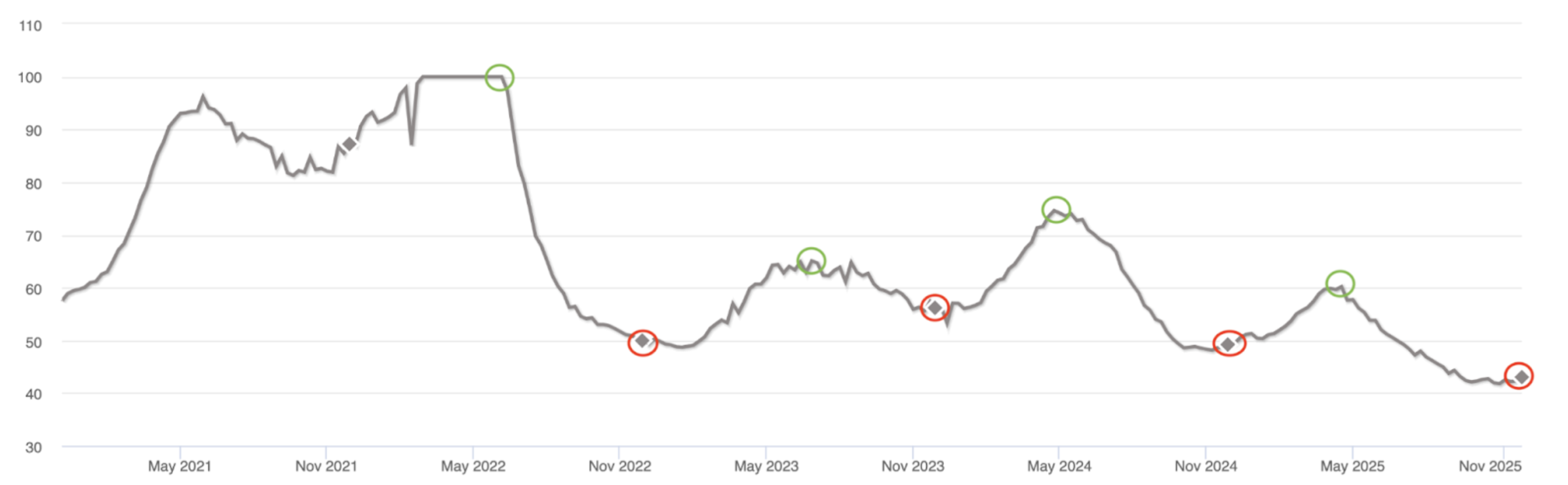
“The data is clear: as a buyer, you’re most likely to score a deal between late October through mid-January. ”
When there are fewer buyers competing for fewer listings, buyers gain leverage. Historically, in the Pacific Northwest, that window runs from late October through mid-January.
You can see in the below chart of the Market Action Index for Seattle, WA, the peaks in green are in the Spring and lows in red are during the Holiday season.
But Why?
Because most people do not want to move during the holidays. Many buyers pause their search, and many sellers prefer to wait until spring. That leaves a smaller pool of listings, often with motivated sellers such as:
Relocation sellers
Estate sales
Downsizing or life-change situations
Job transfers
This shift creates opportunity.
During this slower season, buyers are more likely to:
Face less competition
Write offers with inspection contingencies
Negotiate on price and terms
See more price reductions
Avoid overpaying relative to market value
The trade-off is inventory. You will not have as many homes to choose from, but the homes that are listed often come with more flexibility from the seller.
Strategic Tips for Buyers
If you want to buy at the best price:
Try to negotiate a month-to-month lease if you are renting so you can move when the market slows without penalty.
Get pre-approved in September.
Begin serious home shopping in November and December.
Target closing in December or January.
If your goal is to buy low and sell high:
Purchase during the winter slowdown
Improve the home in January and February
List during spring demand in March or April
This creates a strong timing advantage where you buy during low competition and sell during peak demand.
A Personal Note
This is not just based on market data. It is personal experience.
The last two homes Jenn and I purchased were bought during these slower seasons. Each time, we avoided competition and negotiated well below the median listing price at the time.
Timing didn’t replace good decision-making, but it absolutely worked in our favor.
Want a Strategy Built for You?
If you want to buy low, sell high, and make smart moves at the right time, we would love to help.
Let’s build a custom buy-sell strategy that fits your goals, timeline, and finances.
Schedule a no-obligation consultation with our team today.